Smart board for classroom solutions become truly transformative when paired with a noise meter, as a smart board for classroom equipped with a noise meter empowers educators to track and display sound levels in real time, transforming any smart board for classroom into an optimal learning hub with precise noise meter feedback that ensures ideal acoustic conditions.
What Is a Smart Board?
A smart board is an interactive display device that combines the functionality of a traditional whiteboard with digital touch‑screen technology. By connecting to a computer or network, a smart board allows teachers to present multimedia lessons, annotate over documents in real time, and engage students through interactive quizzes or collaborative activities. Unlike passive projection screens, smart boards respond to finger touch or stylus input, enabling direct manipulation of content. In modern classrooms, they serve as the central hub for lesson delivery, seamlessly integrating videos, animations, and live web content into daily teaching practices.
What Is a Noise Meter?

A noise meter, also known as a sound level meter, is an instrument designed to measure environmental sound pressure levels in decibels (dB). Educators and facility managers use noise meters to monitor ambient noise, ensuring that classroom sound remains within ranges conducive to learning. By continuously tracking fluctuations in volume, a noise meter helps identify periods of excessive chatter, hallway disturbances, or poor acoustics that can undermine lesson clarity. Compact and often equipped with visual indicators or digital readouts, modern noise meters can be integrated into classroom technology systems or operated as standalone devices.
Why Integrate a Noise Meter with Your Classroom Smart Board?
When you pair a noise meter with your classroom smart board, you keep the learning zone quiet and focused without pausing your lesson. You see live sound readings right on the smart board display, so you can gently remind students to lower their voices as soon as things get too loud. This hands‑on blend of interactive teaching and sound tracking helps everyone stay on task, eases listening fatigue, and encourages students to manage their own noise levels. You also gather valuable data to fine‑tune seating plans, adjust lesson pace, and set classroom rules that fit your students’ needs—building a more peaceful, productive learning environment every day.
Best Practices for Implementing a Noise Meter in Smart Board Classrooms
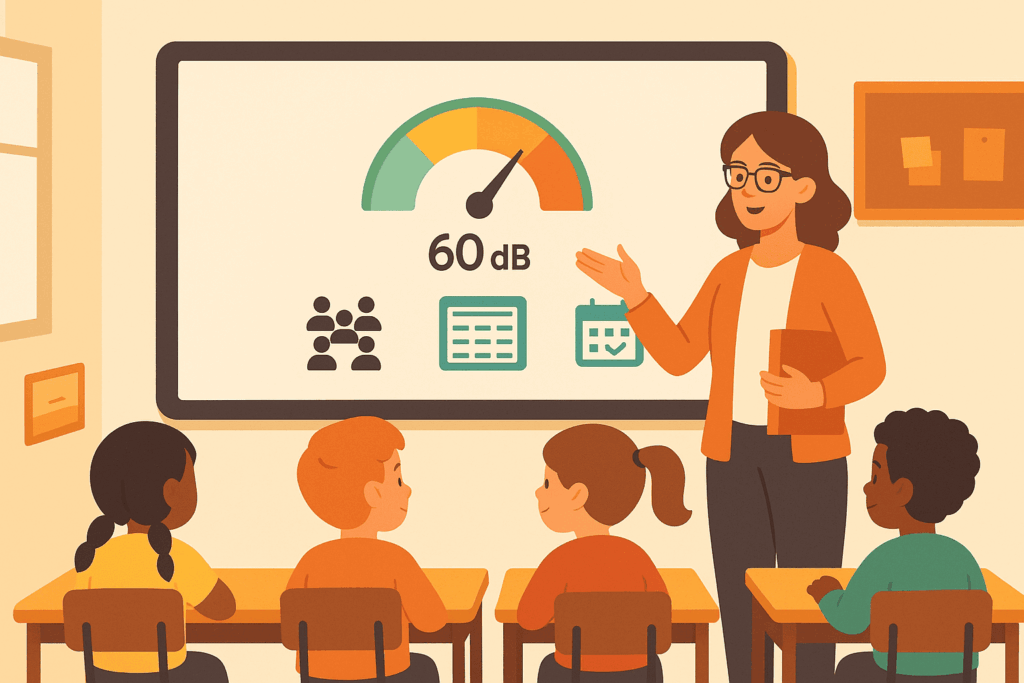
First things first: decide what “too loud” means for your class—younger kids usually need it quieter to stay on task, while older students doing group work can handle a bit more buzz. Pop the noise meter somewhere everyone can see it, or tuck its widget right onto your smart board so live sound levels are always in view. At the start of term, chat with your students about why keeping a moderate volume helps everyone learn better; friendly reminders and those real‑time visuals really stick. Then, each week take a quick peek at the noise logs—spot patterns during group activities, transitions, or specific lessons—and tweak your seating chart, lesson pace, or classroom rules to fit. Little adjustments add up fast, turning your smart board plus noise meter combo into a smoother, more focused learning space.
Warning: The websites and products introduced below are not advertisements or sponsored content. They are provided based on independent research. Please conduct your own thorough evaluation before use; we do not accept any liability.
Bouncy Balls – Classroom Noise Management
Bouncy Balls is a free, web‑based noise meter designed to help teachers visually monitor and control classroom sound levels. When students speak, colorful balls bounce higher on the screen, offering an immediate, intuitive cue for when noise exceeds acceptable limits. You simply open the site in a browser, grant microphone access, and the bouncing balls react in real time—no downloads or accounts required. Web Site
Youlean Free Online Loudness Meter
Youlean’s Online Loudness Meter leverages professional audio algorithms (ITU‑R BS.1770‑4) to display perceived loudness levels via your device’s microphone. It runs entirely in your browser, keeps all audio data local, and offers momentary and short‑term LUFS measurements alongside traditional dBA volume readings. This tool is ideal for educators and AV technicians who want a more technical insight into classroom sound dynamics. Web Site
CheckHearing Online Sound Meter
CheckHearing’s online sound meter provides a simple, precise decibel readout to help you gauge ambient noise before or during hearing‑sensitive activities. It classifies sound levels into color‑coded zones—green for quiet (< 40 dB), blue for acceptable (40–50 dB), orange for too loud (50–60 dB), and red for disruptive (> 60 dB)—and runs in any modern browser once microphone permission is granted. Web Site